Introduction
A private spa can transform an ordinary villa pool area into a more complete wellness and leisure space. The benefits of installing a Jacuzzi or spa in your villa go beyond luxury: warm-water immersion can create a relaxing daily routine, provide temporary relief from muscle tension, support circulation, and give families a comfortable place to unwind without leaving home.
For villa owners in the UAE, however, choosing a spa should not be based on appearance alone. Dubai's climate, outdoor dust, high temperatures, water chemistry, electrical requirements, drainage, equipment access, and ongoing maintenance all influence how successfully a Jacuzzi performs.
A well-designed spa should therefore be treated as part of the property's wider aquatic system rather than as a standalone decorative feature.
This 2026 guide explains the practical advantages, installation considerations, maintenance requirements, safety measures, and design choices homeowners should understand before investing.
A Personal Space for Total Body and Mind Relaxation
One of the simplest reasons homeowners choose a spa is the ability to slow down. Warm water, gentle buoyancy, massage jets, controlled lighting, and a quiet setting can create an environment that feels separate from the rest of the house.
Unlike visiting a commercial wellness center, a private spa is available whenever the owner wants it. A short evening soak can become a consistent transition between work and personal time.
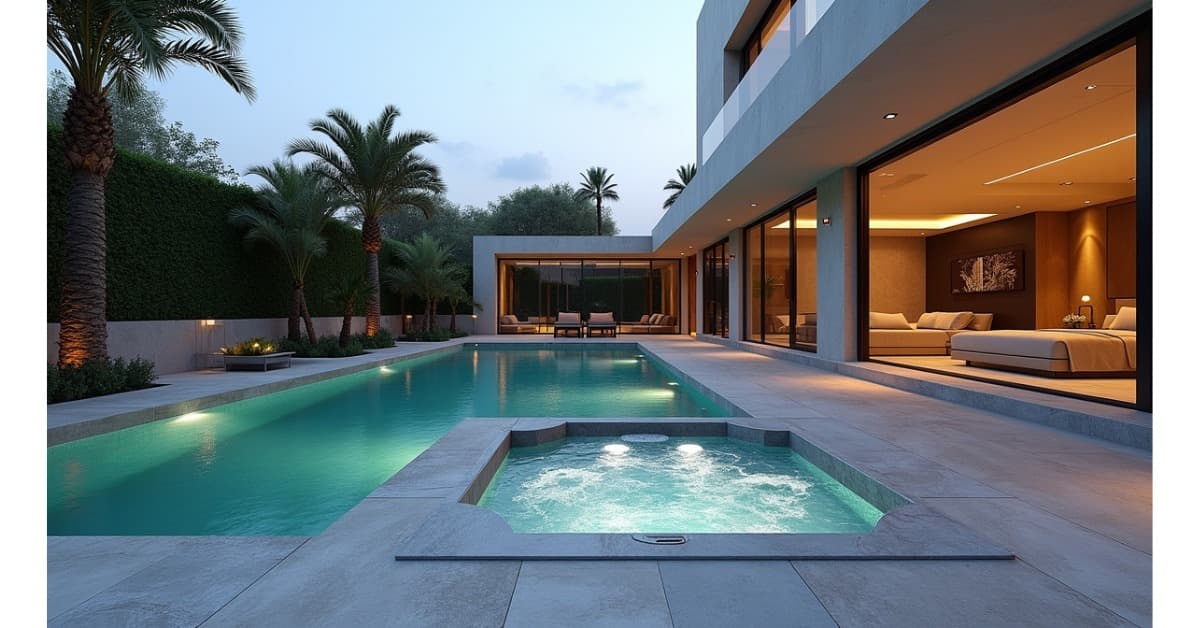
The experience can be especially appealing when the spa is integrated with landscaping, privacy screens, warm lighting, and comfortable seating.
For a Dubai villa, consider creating a dedicated relaxation zone with:
Soft architectural lighting
Privacy planting or screening
Non-slip surrounding surfaces
A direct but clean walkway from the villa
Comfortable outdoor seating
Easy access to towels and changing facilities
The objective is not simply to install hot water and jets. It is to create an environment that encourages regular use.
Practical insight: The best spa location is usually the one that makes using it effortless. A beautiful spa that requires a long walk across the garden or lacks privacy may be used less frequently than a simpler system positioned correctly.
Support for Circulation and Warm-Water Hydrotherapy
Warm-water immersion causes the body to respond to heat, while buoyancy reduces the apparent load on the body. Massage jets can add localized water movement around areas such as the back, shoulders, and legs.
This combination is one reason hydrotherapy has remained popular in wellness settings.
Recent research continues to examine passive heating and hot-water immersion. A 2026 systematic review found that hot-water immersion can produce cardiovascular responses, although the researchers emphasized that evidence for broader long-term health improvements remains an area of study.
This distinction matters. A home spa should be viewed as a wellness and relaxation feature, not a replacement for medical treatment, exercise, or prescribed therapy.
Warm-water experience at a glance
Feature
Potential everyday benefit
Warm water
Encourages relaxation and warmth
Buoyancy
Makes movement feel easier
Water jets
Provides massage-like pressure
Immersion
Creates a calming wellness routine
Heat exposure
Produces temporary cardiovascular responses
For homeowners interested primarily in relaxation, circulation support and comfort, these features can make a spa a practical addition to an existing pool environment.
Muscle Relaxation and Post-Activity Recovery
After exercise, gardening, travelling, or a physically demanding day, warm water can feel particularly soothing.
The combination of heat, buoyancy, and water movement may temporarily reduce the sensation of stiffness and muscle tension. The effect is not the same as clinical rehabilitation, but it can be a useful part of a general recovery routine.
Jet placement matters considerably.
A poorly designed system may have impressive jet numbers but deliver little useful massage. A better configuration considers where the user will sit and which areas should receive targeted water movement.
Common zones include:
Lower back
Upper back
Shoulders
Calves
Feet
Thighs
For active villa owners, the spa can complement a swimming pool by providing two different experiences: exercise in cooler water and relaxation in warm water.
A practical routine might involve swimming first, cooling down, showering, hydrating, and then using the spa briefly for relaxation.
The key is moderation. Longer or hotter sessions are not automatically better.
Better Sleep and an Evening Wind-Down Routine
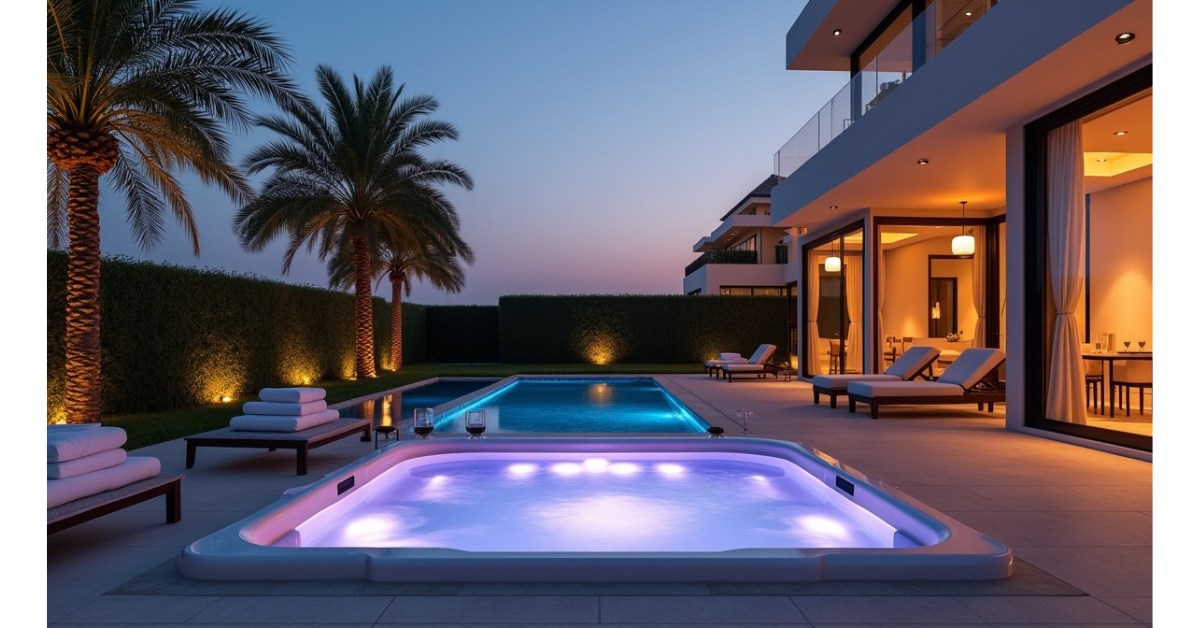
A spa can also become part of a consistent nighttime routine.
Warm-water immersion may help people transition from an active evening into a calmer state. Research published in 2026 on water-immersion thermotherapy found improvements in total sleep time and sleep efficiency in the studies reviewed, although the authors also noted limitations across the available evidence.
This means homeowners should think of a spa as a potential sleep-supporting routine, rather than a treatment for insomnia.
The environment can make a difference. Bright outdoor lighting, loud music, and excessive screen use can work against the calming purpose of the space. Softer lighting and a quieter setting may create a better experience.
A simple evening routine
Swim → shower → short warm-water soak → hydrate → relax → bedtime
Timing, temperature, and individual tolerance should always be considered. Anyone with a medical condition, pregnancy, cardiovascular concerns or medication-related heat sensitivity should seek appropriate medical advice before using very hot water.
A More Private and Convenient Wellness Experience
Privacy is one of the strongest lifestyle advantages of a villa spa.
Instead of travelling to a hotel, gym, or commercial wellness centre, homeowners can enjoy a private setting with people they already know.
This can be particularly useful for:
Couples seeking quiet time
Families spending evenings together
Homeowners who prefer private wellness
Guests visiting the villa
People wanting a relaxing outdoor space without leaving home
A spa can also make an underused section of a garden more functional.
For example, a narrow landscaped area beside the swimming pool can potentially become a compact wellness zone rather than remaining unused space.
The design should still respect privacy, drainage, ventilation, and maintenance access.
In high-density villa communities, privacy screening can be created through architectural walls, planting, pergolas, or carefully positioned outdoor structures.
Adding Luxury and Functionality to the Villa
A well-designed spa can strengthen the visual identity of a villa's outdoor area.
Modern installations can be integrated with:
Swimming pools
Infinity edges
Water features
Outdoor kitchens
Landscaped gardens
Pergolas
Pool decks
Smart lighting
Seating areas
The most successful designs usually treat the pool and spa as one coordinated composition.
A pool-connected spa, for example, can create a visual transition between swimming and relaxation. A separate garden spa can provide a quieter retreat away from the main pool.
The correct choice depends on the villa's architecture, available space, intended use, and maintenance strategy.
Choosing the Right Location, Design, and Equipment
Installation planning is where many spa projects succeed or fail.
Before selecting a model or finalizing a design, assess the available space, foundation, drainage, electrical supply, plumbing routes, and equipment access.
A spa filled with water can be extremely heavy. If it is installed on a terrace, roof, balcony, or existing structure, the supporting structure should be assessed by an appropriately qualified professional.
Outdoor UAE installations also need protection from intense sun, dust, and weather exposure.
Important planning questions include:
Is the foundation strong and level?
Is there adequate drainage?
Can technicians access the equipment?
Is the electrical supply suitable for the selected system?
Where will the filter, pump, and heater be located?
Is there sufficient ventilation where required?
Is the spa protected when it is not being used?
Does the proposed installation meet applicable project and authority requirements?
The equipment should be selected according to spa volume, bather load, circulation requirements, heating needs, and intended operating schedule—not simply by appearance or jet count.
Why Maintenance Is Essential for a Healthy Spa
A beautiful spa is only as good as its water quality and equipment condition.
Hot tubs have relatively small water volumes compared with their bather load, and warm water can create challenging conditions for water treatment. That makes regular testing, filtration, and cleaning particularly important.
For residential hot tubs, the CDC recommends maintaining pH between 7.0 and 7.8 and, depending on the sanitizing method, at least 3 ppm free chlorine or 4 ppm bromine, while following manufacturer instructions.
Maintenance should cover both water and mechanical systems.
A professional maintenance plan can also identify small problems before they become expensive repairs.
Safety Considerations Every Villa Owner Should Know
Relaxation should never come at the expense of safety.
The CDC advises that hot-tub water should not exceed 104°F (40°C) and recommends appropriate sanitizer and pH levels. It also advises against hot-tub use for children under five and recommends that pregnant people consult a healthcare professional before use.
The surrounding area matters too.
Use slip-resistant materials around wet surfaces, keep electrical installations appropriately protected, provide safe access, and avoid clutter around the spa.
Users should also avoid entering the spa while ill with diarrhea and should shower before entering.
Hot tubs can present microbiological risks when poorly maintained. CDC guidance highlights concerns including Pseudomonas and Legionella, which is why correct disinfection, filtration, and routine cleaning are essential.
A secure cover can provide additional protection when the spa is not in use.
For a private villa, the goal should be to combine safe water, safe temperature, safe access, and safe equipment operation.
Long-Term Value: Is a Spa Worth the Investment?
The value of a villa spa should not be judged only by potential property resale value.
A better question is, will the household actually use it enough to justify the installation and operating costs?
If the spa becomes part of a regular wellness routine, family entertainment space or outdoor living area, it can provide meaningful lifestyle value.
The investment should include more than the purchase price.
Consider:
Spa or custom construction cost
Foundation and structural work
Plumbing
Electrical installation
Pump and filtration equipment
Heating
Waterproofing
Finishes and landscaping
Water treatment
Routine servicing
Filter and component replacement
Energy consumption
Energy management also deserves attention. A quality insulated cover can reduce heat loss when the spa is not being used, while efficient pumps, sensible temperature settings, and appropriate operating schedules can help control running costs.
Before you invest, ask yourself
Usage: Will we use the spa regularly?
Location: Does the proposed position offer privacy and convenient access?
Maintenance: Who will test the water and inspect the equipment?
Budget: Have installation and long-term running costs both been included?
Design: Does the spa complement the existing pool and villa architecture?
A professional site assessment can answer many of these questions before construction begins.
Internal link opportunity: Link the phrase “pool renovation and equipment upgrades” to the site's relevant renovation service when discussing integration with an existing pool.
FAQs
Is a Jacuzzi good for relaxation?
Yes. Warm water, buoyancy, and massage jets can create a relaxing environment and help reduce the feeling of everyday muscle tension.
Does a spa improve blood circulation?
Warm-water immersion causes temporary cardiovascular and blood-flow responses, but it should not be considered a medical treatment for circulation problems.
How often should a villa spa be maintained?
Water chemistry should be checked regularly, while filters, surfaces, jets and equipment should be serviced according to usage and manufacturer recommendations.
What temperature should a hot tub be?
The CDC advises that hot-tub water should not exceed 104°F (40°C).
Is a Jacuzzi suitable for a Dubai villa?
Yes, when the system is properly designed for the climate, space, drainage, electrical requirements, water treatment, and maintenance needs.
Conclusion
The benefits of installing a Jacuzzi or spa in your villa extend from simple relaxation to creating a complete private wellness environment. Warm-water immersion, hydrotherapy jets, privacy, and thoughtful landscaping can turn an ordinary pool area into a place that homeowners actually want to use throughout the year.
However, the best results come from treating the spa as an engineered aquatic system rather than simply a luxury accessory. Correct foundations, drainage, circulation, filtration, heating, electrical planning, and water treatment are just as important as attractive finishes and powerful jets.
For UAE villas, maintenance is particularly important. Regular water testing, filter care, equipment inspections, and preventive servicing help protect both the user's experience and the investment itself.
If you are considering adding a spa to your villa, start with a professional site assessment rather than choosing equipment first. Ask the installer to review the available space, structure, hydraulics, electrical supply, drainage, heating requirements, and long-term maintenance plan.
Actionable next step: Request a site consultation and ask for an itemized proposal covering installation, equipment, safety provisions, commissioning, and ongoing care. This makes it easier to compare solutions based on the complete cost of ownership rather than the initial price alone.
Author & Expertise
Written and reviewed by the BAB ALFIZA Pool Experts, a UAE swimming-pool team specializing in pool construction, renovation, maintenance, Jacuzzi and spa systems, water features, lighting, and pool MEP solutions.