Introduction
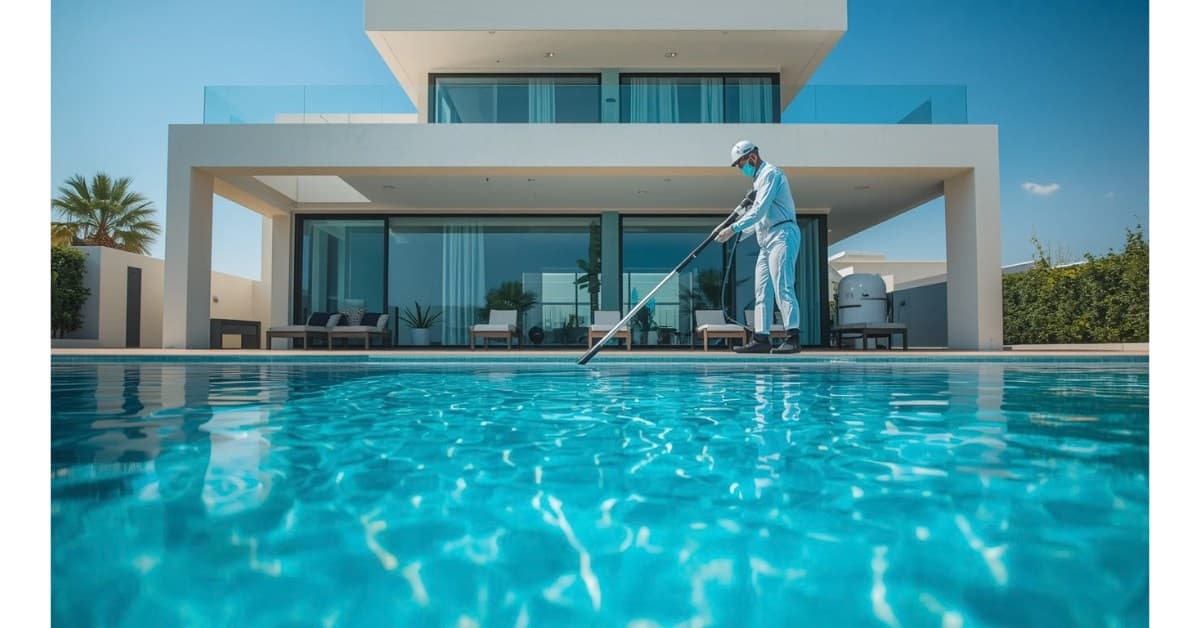
A swimming pool in Dubai needs more than an occasional skim and a little chlorine. High temperatures, dust, sand, intense sunlight, evaporation, frequent swimming, and outdoor exposure can all affect water quality and equipment performance. A pool that looks clean on the surface may still have unbalanced chemistry, clogged filtration, calcium deposits, or developing algae underneath.
For homeowners, property managers, and villa owners, following a reliable swimming pool cleaning schedule Dubai plan makes pool care much easier. Instead of waiting until the water turns cloudy or the pump begins struggling, regular maintenance catches small problems before they become expensive repairs.
How Often Should a Pool Be Cleaned in Dubai?
There is no single cleaning frequency that works for every swimming pool. The ideal routine depends on pool size, swimmer numbers, location, surrounding landscaping, filtration equipment, water chemistry, and how much dust and debris enter the water.
For most residential pools, a useful starting point is:
Daily: visual inspection and water-quality checks
Several times per week: remove leaves, insects, and floating debris as required
Weekly: brush surfaces, vacuum the pool, clean baskets, and inspect equipment
Monthly: perform a more detailed service and filtration inspection
Seasonally: review equipment, water balance, surfaces, and overall system performance
Immediately: respond to contamination, unusual water colour, leaks, equipment failure, or major debris
Professional service providers in Dubai commonly structure residential plans around weekly visits, while deeper monthly services can focus on filtration, calcium deposits, and system health. BAB ALFIZA similarly offers weekly premium maintenance and monthly deep-maintenance options.
Daily Pool Maintenance Tasks
Daily maintenance does not mean performing a complete professional cleaning every morning. It means spending a short amount of time checking the pool and dealing with problems before they develop.
Start by looking at the water. Clear water should allow you to see the pool floor and main drain clearly. Cloudiness, unusual colour, surface film, excessive foam, or strong chemical odours can indicate a water-balance or circulation problem.
The next step is to check the water chemistry. The CDC identifies chlorine and pH as important first-line controls for reducing swimming-related illness and recommends routine testing. For residential pools, its guidance gives a pH range of 7.0–7.8 and recommends testing chlorine and pH at least twice a day, with more frequent checks during heavy use. Always consider the requirements of your specific treatment system and product manufacturer. [1]
Daily checklist
Inspect water clarity.
Remove visible leaves and insects.
Check the water level.
Test sanitizer and pH according to the pool's maintenance plan.
Look for unusual pump noise.
Check for visible leaks around equipment.
Confirm circulation is operating correctly.
Empty the skimmer basket when necessary.
Dubai homeowners should pay particular attention to evaporation and dust. A pool can lose water quickly during hot periods, while airborne particles can increase the load placed on skimmers and filters.
If a daily inspection reveals an abnormal condition, do not simply add more chemicals and hope it disappears. The cause may be filtration, circulation, contamination, or incorrect dosing.
Weekly Cleaning and Water-Care Routine
While daily checks protect water quality, the weekly service is where most physical cleaning should happen.
Begin by skimming the surface and emptying baskets. Next, brush the walls, corners, steps, benches, and waterline. Brushing is particularly important because microorganisms and organic material can accumulate on surfaces even when the water appears clear.
After brushing, vacuum the pool floor. Depending on the equipment installed, this may be done manually or with an automated cleaner.
The filter should also be inspected. A filter that is becoming clogged can restrict circulation and increase the workload on the pump.
A practical weekly sequence
Step 1 — Surface cleaning
Remove floating debris and empty skimmer baskets.
Step 2 — Wall and tile brushing
Pay attention to corners, steps, waterline tiles, and areas with low circulation.
Step 3 — Vacuuming
Remove sand, dust, dead algae, and settled particles from the floor.
Step 4 — Water testing
Check sanitizer, pH, and other relevant parameters for the pool's treatment system.
Step 5 — Equipment inspection
Check the pump, filter, valves, chlorination system, and visible pipework.
Step 6 — Record the service
Keep notes of readings, chemical adjustments, filter cleaning, and unusual observations.
Maintaining records is particularly useful when a pool develops a recurring problem. Instead of guessing, a technician can compare current conditions with previous readings.
BAB ALFIZA's current maintenance service describes chemical balancing, debris removal, bottom vacuuming, tile scrubbing, and equipment health checks as core maintenance activities.
Monthly Deep Cleaning and Equipment Inspection
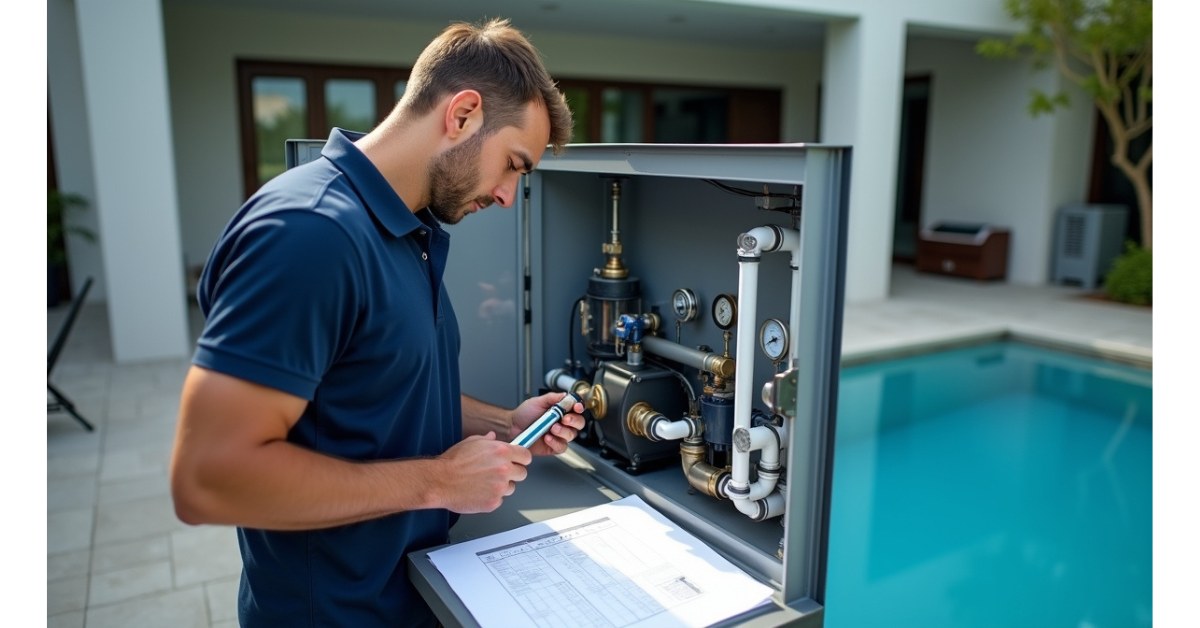
A monthly deep service goes beyond making the pool look attractive. Its purpose is to examine areas that may not receive enough attention during routine cleaning.
This can include filter servicing, detailed tile and surface cleaning, calcium buildup inspection, equipment checks, and a review of the pool's overall operating condition.
A useful monthly inspection should consider:
Filter pressure and condition
Pump performance
Skimmer and pump baskets
Waterline deposits
Calcium scaling
Tile condition
Grout and surface condition
Leaks around equipment
Automatic cleaner performance
Chemical dosing equipment
Pool lights and visible electrical components
Water level and evaporation patterns
Not every pool requires identical monthly work. A lightly used indoor pool may have different requirements from an outdoor villa pool surrounded by landscaping.
BAB ALFIZA's monthly deep package specifically includes filter backwash and cleaning, calcium-build-up removal, and a technical report, illustrating why deeper maintenance should address system longevity as well as appearance.
When is a deep clean especially important?
Schedule additional attention after:
A long period without maintenance
Heavy storms or dust events
Extended periods of high pool use
An algae outbreak
Construction or landscaping near the pool
Major chemical imbalance
Equipment replacement
A prolonged vacancy
Dubai's Climate and Its Effect on Pool Maintenance
Dubai's environment changes the way a swimming pool should be maintained.
High heat increases evaporation. Evaporation does not remove dissolved minerals and chemicals at the same rate as water, so the concentration of some substances can change as water is lost and replaced.
Dust and sand can also enter outdoor pools. These particles eventually reach the skimmer, filter, pool floor, and equipment system.
Strong sunlight is another consideration. Ultraviolet exposure can affect sanitizer levels, while high water temperatures may contribute to faster changes in water chemistry.
Water Chemistry: What Homeowners Should Monitor
Clean-looking water does not automatically mean chemically balanced water.
Water chemistry protects swimmers while also helping protect the pool's surfaces, plumbing, and equipment. If pH moves too far outside the appropriate range, sanitizer effectiveness can change and irritation or equipment problems may become more likely.
The CDC states that pH and chlorine are central to maintaining healthy swimming water. Its residential guidance recommends pH of 7.0–7.8 and at least 1 ppm chlorine for pools without cyanuric acid, while stabilized chlorine systems have different requirements. Product labels and the pool system manufacturer's instructions should always be followed. [1]
Important parameters
Free chlorine: Helps disinfect the water.
pH: Influences sanitizer performance, swimmer comfort, and equipment protection.
Total alkalinity: Helps stabilize pH.
Calcium hardness: Helps manage the balance between water and pool surfaces.
Cyanuric acid: Relevant when stabilized chlorine products are used and should be managed according to the treatment system.
Testing should not be based purely on appearance or smell. A strong “chlorine smell” can actually be associated with chloramines, which form when chlorine reacts with contaminants brought into the pool. The CDC explains that chloramines can irritate the eyes, skin, and respiratory system, particularly in poorly ventilated indoor environments. [2]
For chemical handling, use appropriate protective equipment, follow product instructions, and never mix incompatible chemicals.
When Your Pool Needs More Frequent Cleaning
The calendar is only part of the answer. Certain warning signs mean the normal routine should be increased or a professional inspection should be arranged.
Watch for these signs
Cloudy water:
May indicate filtration problems, chemical imbalance, excessive contaminants, or poor circulation.
Green water:
Often associated with algae growth and requires investigation rather than simply adding random chemicals.
Rapidly falling water level:
Could be normal evaporation, but unexplained water loss may indicate a leak.
Strong odour:
Can be associated with chloramines or other water-quality problems.
Visible deposits:
White or rough deposits may indicate mineral or calcium scaling.
Poor circulation:
Weak returns, unusual pump behaviour, or rising filter pressure can indicate equipment or filtration problems.
Repeated chemical imbalance:
If readings repeatedly move out of range despite correct maintenance, investigate the underlying cause.
Public-pool guidance from the CDC also emphasizes maintaining filtration and recirculation systems, keeping accurate maintenance records, and implementing preventive maintenance rather than waiting for equipment to fail. [3]
For a residential pool, the same principle is useful: fix the cause, not just the symptom.
Pool Equipment and Filtration Maintenance
Water quality depends heavily on mechanical systems.
The pump circulates water through the filtration and treatment system. The filter captures particles. Skimmers remove floating debris. Automatic cleaners help with physical cleaning, while chemical dosing or chlorination systems help maintain disinfection.
A pool can therefore be chemically balanced and still perform poorly if circulation is inadequate.
Equipment inspection checklist
Component
What to check
Warning sign
Pump
Noise, flow, leaks
Loud operation or weak flow
Filter
Pressure and cleanliness
Pressure rising unusually
Skimmer
Basket and suction
Poor debris collection
Cleaner
Movement and suction
Stops or leaves debris
Valves
Position and leaks
Drips or incorrect flow
Chlorinator
Operation and dosing
Inconsistent sanitizer
Pool lights
Visible condition
Moisture or failure
Heater
Operation and connections
Unusual performance
Manufacturers' maintenance instructions should take priority because filter types, pumps, automation systems, and chemical systems differ.
If servicing electrical equipment, pumps, chemical dosing equipment, or other technical systems, use qualified professionals. The CDC's pool chemical safety guidance also emphasizes training, appropriate protective equipment, ventilation, secure chemical storage, and preventive maintenance. [4]
Common Cleaning Mistakes to Avoid
Many pool problems are not caused by a lack of effort. They happen because maintenance is performed inconsistently or without understanding the underlying system.
Mistake 1: Cleaning only when the pool looks dirty
Water chemistry and equipment condition can deteriorate before the problem becomes visible.
Mistake 2: Adding chemicals without testing
Guessing chemical quantities can create new problems. Test first and follow the product instructions.
Mistake 3: Ignoring the filter
A dirty filter can restrict circulation and reduce overall system performance.
Mistake 4: Forgetting the waterline
The waterline can accumulate oils, minerals, sunscreen residue, and other deposits.
Mistake 5: Treating algae but not investigating why it appeared
An algae problem can be connected to inadequate sanitizer, poor circulation, filtration issues, or insufficient cleaning.
Mistake 6: Using one schedule throughout the year
Pool use and environmental conditions change. Maintenance should be adjusted accordingly.
Mistake 7: Delaying equipment repairs
A small leak or unusual pump noise may be an early warning of a larger failure.
The goal is not simply to have a sparkling pool today. The goal is to maintain a system that continues to operate efficiently and safely over time.
A Practical 2026 Pool Maintenance Calendar
The following calendar can serve as a starting framework for a Dubai villa pool. It should be adjusted according to usage, weather, pool design, water-treatment technology, and professional inspection findings.
Weekly and monthly maintenance planner
Period
Recommended work
Every day
Visual inspection, debris removal, water-quality checks as required
2–3 times weekly
Extra skimming and surface attention when debris or usage is high
Every week
Brush, vacuum, clean baskets, inspect equipment and water chemistry
Every month
Deep clean, filter service as required, inspect deposits and equipment
Every 3–6 months
Review system performance, equipment condition, and recurring issues
After major weather events
Remove debris, test water, inspect filtration and circulation
Before major events
Complete cleaning, chemistry check, equipment inspection
After long vacancy
Professional cleaning, water testing, filtration and equipment review
A simple maintenance log can make this routine even more effective. Record the date, water readings, cleaning completed, equipment observations, and any chemicals or repairs used.
A simple rule for Dubai homeowners
Daily = monitor.
Weekly = clean.
Monthly = inspect deeply.
Seasonally = review the whole system.
Immediately = respond to problems.
This approach provides flexibility without turning pool maintenance into guesswork.
FAQs
How often should a swimming pool be cleaned in Dubai?
Most residential pools benefit from routine weekly physical cleaning, with daily monitoring and additional cleaning when usage, dust, or weather conditions increase.
How often should pool water be tested?
Water chemistry should be checked regularly; the CDC recommends testing chlorine and pH at least twice daily for residential pools, with more frequent checks during heavy use. [1]
Is weekly pool cleaning enough in Dubai?
Weekly service can be a useful baseline, but heavily used or exposed outdoor pools may need additional attention between scheduled visits.
How often should a pool filter be cleaned?
Filter servicing depends on filter type, pressure readings, water quality, and manufacturer instructions rather than a universal calendar interval.
When does a pool need professional deep cleaning?
Arrange deeper service when water becomes cloudy or green, deposits build up, the pool has been neglected, equipment performance changes, or routine cleaning no longer restores water quality.
Conclusion
A well-maintained swimming pool should not require emergency cleaning every time someone wants to use it. The most effective approach is preventive: monitor water quality regularly, remove debris before it accumulates, brush and vacuum every week, inspect filtration and equipment, and arrange deeper maintenance when conditions require it.
For Dubai properties, environmental conditions make consistency especially important. Heat, evaporation, dust, sunlight, and frequent use can all change the maintenance requirements of an outdoor pool. That is why a flexible routine is more practical than relying on a single cleaning interval for the entire year..
If your pool has not been professionally inspected recently, book a pool cleaning and maintenance assessment with BAB ALFIZA. The team provides water testing, debris removal, filter checks, equipment inspections, and ongoing maintenance across Dubai and the UAE.